
Our mission is to live a life of joy
in the Nembutsu & share the Dharma with others.
Our Temple was started in Berkeley one hundred years ago by Issei (first generation) pioneers from Japan. Though today we are still enjoying the ethnic traditions the founders brought with them, we are experiencing the exciting beginnings of broadening our base to include a multi-culturalism that can enhance and deepen our understanding of Jodo Shinshu Buddhism.
Buddhists Living in Equality
and Non-Discrimination (BLEND)
by Rev. Dr. David Matsumoto
BLEND is how we describe our acceptance and appreciation of our blended lives. It signifies that we can embrace the purity of those lives, and reflects the aspiration and commitment on the part of our temple and ourselves as Buddhists to understand and celebrate the richness, diversity and challenges of our blended lives.
May we all endeavor to think, speak and act in ways that will promote the inclusion of all people in our sangha and throughout our lives.
Announcements
Visit our Calendar page for more information on each event.

Berkeley Buddhist Temple 74rd Annual Satsuki Bazaar
Sunday, May 19th from 12noon - 6pm
Please plan to come and bring family and friends to enjoy good food, good music and fun people!
Pre-order BBQ Steak Dinners:
https://sanghaevents.info/satsukisteak
Make a Satsuki Bazaar Donation:
https://sanghaevents.info/satsukifundraiser
Silent Auction: COMING SOON!
Everyone is welcome.
We look forward to seeing you all at Satsuki!

Meditation & discussion
May 1st, 2024, Wednesday 7:00pm
Join us for an evening of online silent meditation led by our minister, Rev. Kuwahara. Everyone is welcome and no prior experience needed. We will have a short discussion after. All are welcome!

BBT Dharmanar
May 2nd, 2024, Thursday, 6:30pm
Join us for BBT's monthly online study session. The next session’s topic will be Birth, Karma. Rev. Kuwahara, Rev. CJ, and Rev.Tanis Moore will be presenting.

virtial chair yoga
April 25th, 2024, Thursday, 8:00am
Join us for a gentle yoga session by Hitomi Kuwahara that you can do while sitting on a chair or couch without a yoga mat. No experience or registration needed. Everyone is welcome!
Please fill out and sign a waiver form before joining the class. You only need to fill out once.


Our Calendar
Learn more about the upcoming events at our temple.
Everyone is welcome to attend.

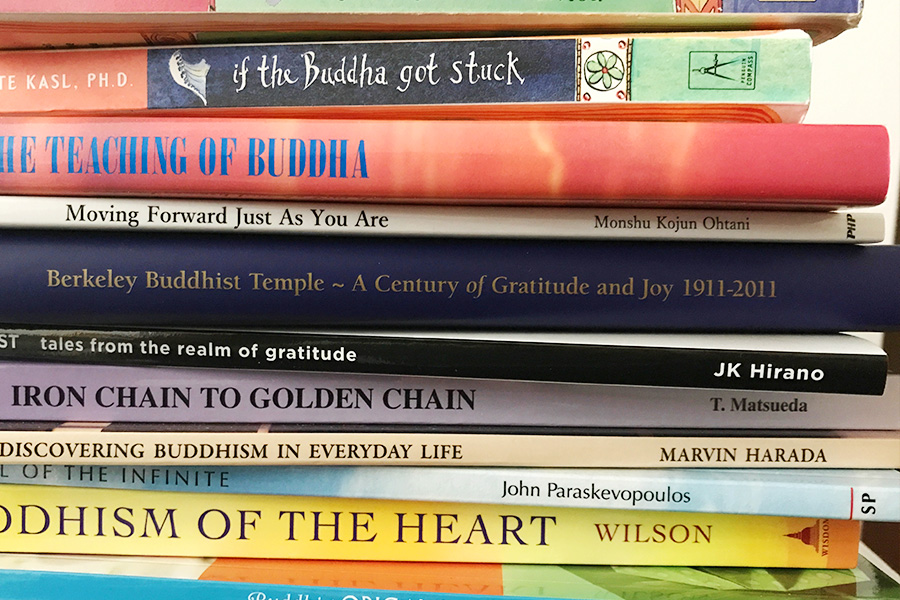
BUDDHIST CHURCHES OF AMERICA Bookstore (BCA)
The BCA Bookstore serves the BCA churches/temples and fellowships throughout the nation, educational institutions (particularly the Institute of Buddhist Studies, or IBS), the Center for Buddhist Education, and those interested in Buddhism worldwide.